The wind gets colder, the jackets come out, heaters are put to the test, and snow shovels are at the ready. Yep, I am talking about winter, folks. Good old Jack Frost is nipping at our noses. The question is, are you ready this year? Better yet, is your home ready? With every change of season, so comes the responsibility of prepping our homes for the weather to come. In a society with service companies on speed dial, we often take for granted that our appliances and energy efficiency systems are good to go. Here are my top 5 helpful tips to not only save a little money this winter on utility costs but also keep your family safe:
1. Check your gas water heater and gas furnace venting. According to a recent Consumer Product Safety Commission report, we are told that 204 people died due to preventable carbon monoxide poisoning in 2021. In fact, of the 204 people killed by carbon monoxide poisoning, 63 deaths (31%) involved heating systems. Did you know that most gas water heaters and furnaces require a mechanical connection for their venting and prohibit the use of tape to secure connections? Did you know that the state of Oklahoma code defers to the manufacturer’s installation guidelines? I don’t know how many homes I find with improper venting connections, but I can confidently say it is over 50%. A simple check of the venting connections could save your or a loved one’s life this winter. Get a carbon monoxide test done on your appliances before the winter gets into full swing.
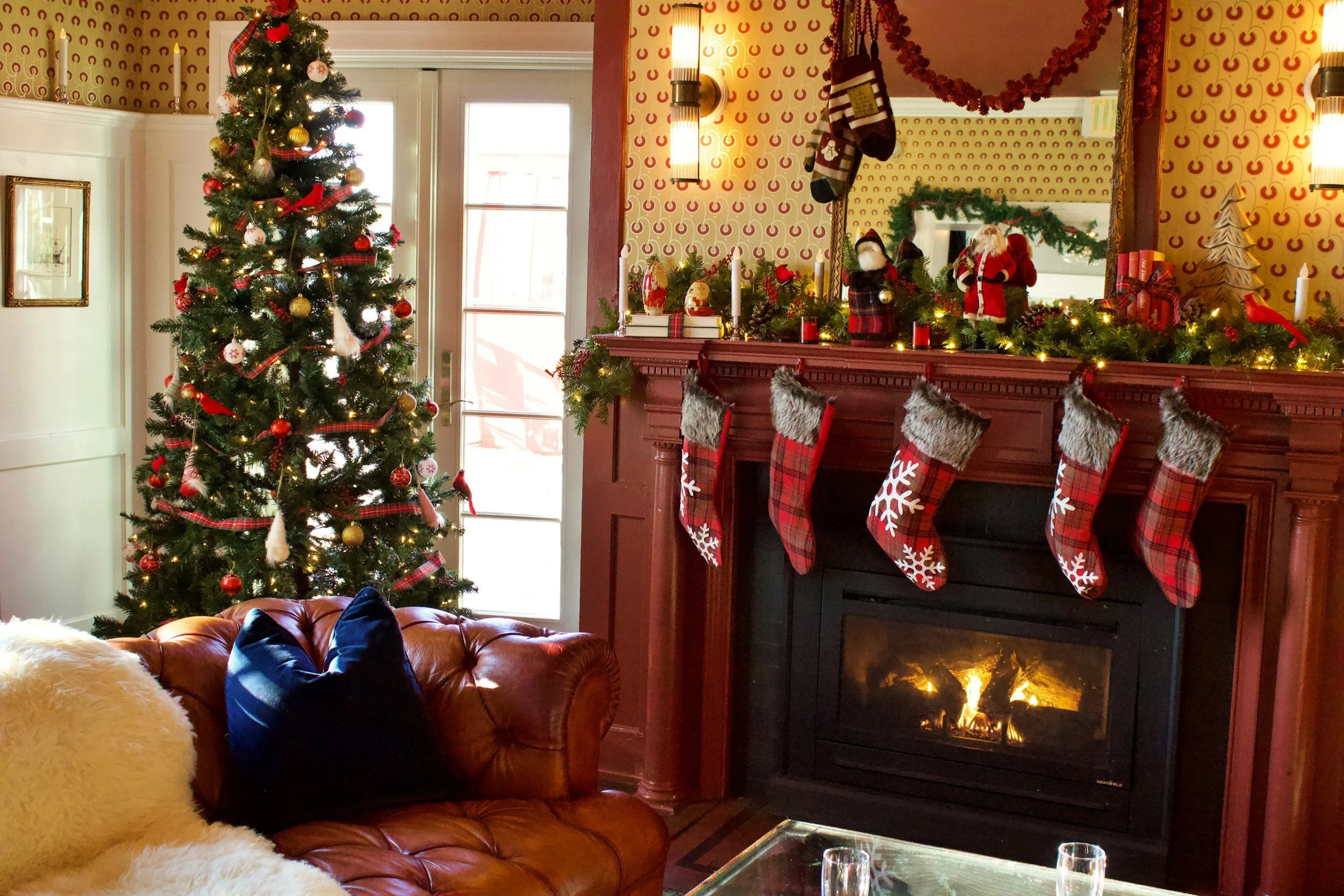
2. Have a fireplace? Get it cleaned and serviced for the winter. Fireplaces can be a wonderful addition to a home if they are well-maintained. The United States Fire Administration reports that in 2023, there were 9 deaths due to structure fires and roughly 10 injuries per 1000 fires across the state of Oklahoma. According to Oklahoma.gov, nearly 20% of house fires start from heating appliances and fireplaces. Creosote, a black and tar-like deposit, can build up in wood-burning or gas log vented fireplaces. Since it ignites easily, it can cause fires in the flue to exceed the threshold of the flue, leading to disastrous house fires. Creosote also clogs up your chimney flue and prevents carbon monoxide from venting out of your home. Moral of the story? Hire a chimney sweep to check the flue and clean it before use this winter; a properly serviced fireplace will save your home and your life.
3. Evaluate the energy efficiency of your windows. Older windows could be costing you $100-$500 annually in energy loss due to increased utility usage. According to the US Department of Energy, approximately 30% of a home's heating energy is lost through its windows during the winter months. During the warmer months, about 76% of the sunlight that falls on standard double-pane windows enters the home and becomes heat. Energy loss through poorly constructed or older windows literally is money going out the window. If replacing your windows isn’t in the budget this year, then a couple of these options may be more cost-effective:
Energy-efficient blinds
Energy-efficient curtains
Energy-efficient film for windows
Think in terms of what increases your R-value, and you will be making a difference.
4. Prevent “Oh No’s” in plumbing lines. Did you know that letting your water run on a slow drip during a hard freeze can prevent your pipes from bursting? But better yet, did you know that installing insulated covers over your outdoor water spigots and on the lines going to your water heater can make a huge difference? According to a 2024 Concordia University study, running water during a hard freeze partially helps prevent pipes from freezing. By maintaining water flow, the temperature required to freeze the water becomes lower than what is required to freeze stagnant water. Therefore, combining a slow drip with proper pipe insulation can make a huge difference in preventing your water pipes from freezing. The money you save by having your water off during a hard freeze could cost you hundreds or thousands of dollars in repairs should the pipes burst.
*Important note* These preventive measures alone are often not sufficient when temperatures go below zero degrees; additional measures should be taken to prevent frozen pipes.
5. Evaluate your home’s insulation. Having proper insulation in your home is a constant battle, but it could save you big money on your heating and cooling bills. According to the US Department of Energy, “installing more insulation in your home increases the R-value and the resistance to heat flow. In general, increased insulation thickness will proportionally increase the R-value.” Therefore, generally speaking, more insulation means less energy loss, which equals more money saved during those arduous winter months! Check that insulation, folks, and you just might find that you could use a little more. A little more insulation could result in big savings on your utility bill.
This doesn’t cover everything you should do to prepare for the winter, but it does cover a couple of the big areas. If you live in Northeast Oklahoma and need a home inspection, reach out to us. We are more than happy to check venting connections, crawl into attics and crawlspaces to check insulation, and perform thermal imaging surveys to see those primary areas of energy loss in your home.
Bibliography
Oklahoma State Department of Health. 2008. “House Fires Causes and Prevention.” Oklahoma.gov. 2008. https://oklahoma.gov/content/dam/ok/en/health/health2/documents/house-fires-brochure-english.pdf.
Topping, John. 2025. “Non-Fire Carbon Monoxide Deaths Associated with the Use of Consumer Products 2021 Annual Estimates.” United States Consumer Product Safety Commission. https://www.cpsc.gov/s3fs-public/Non-Fire-Carbon-Monoxide-Deaths-Associated-with-the-Use-of-Consumer-Products-2021-Annual-Estimates-FY24.pdf.
U.S. Department of Energy. 2022. “Insulation.” Energy.gov. 2022. https://www.energy.gov/energysaver/insulation.
———. 2024. “Energy Efficient Window Coverings.” Energy.gov. 2024. https://www.energy.gov/energysaver/energy-efficient-window-coverings.
U.S. Fire Administration. 2025. “Oklahoma Fire Loss and Fire Department Profile.” 2025. https://www.usfa.fema.gov/statistics/states/oklahoma.html.
Usmani, Shadab. 2024. “Investigating the Minimum Discharge Required to Prevent the Winter Freezing of Water Supply Mains.” Concordia University. https://spectrum.library.concordia.ca/id/eprint/994013/1/Usmani_MASc_F2024.pdf